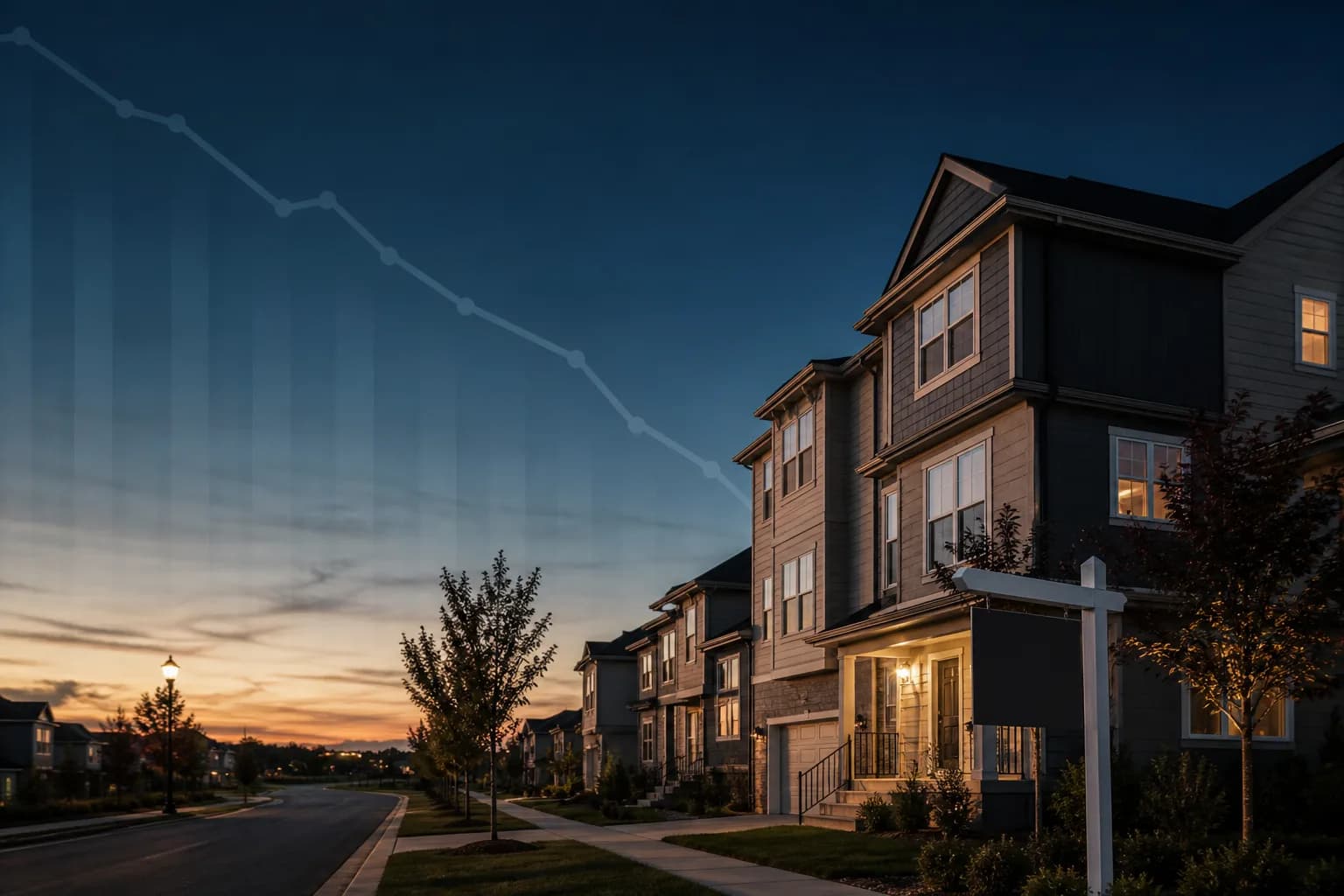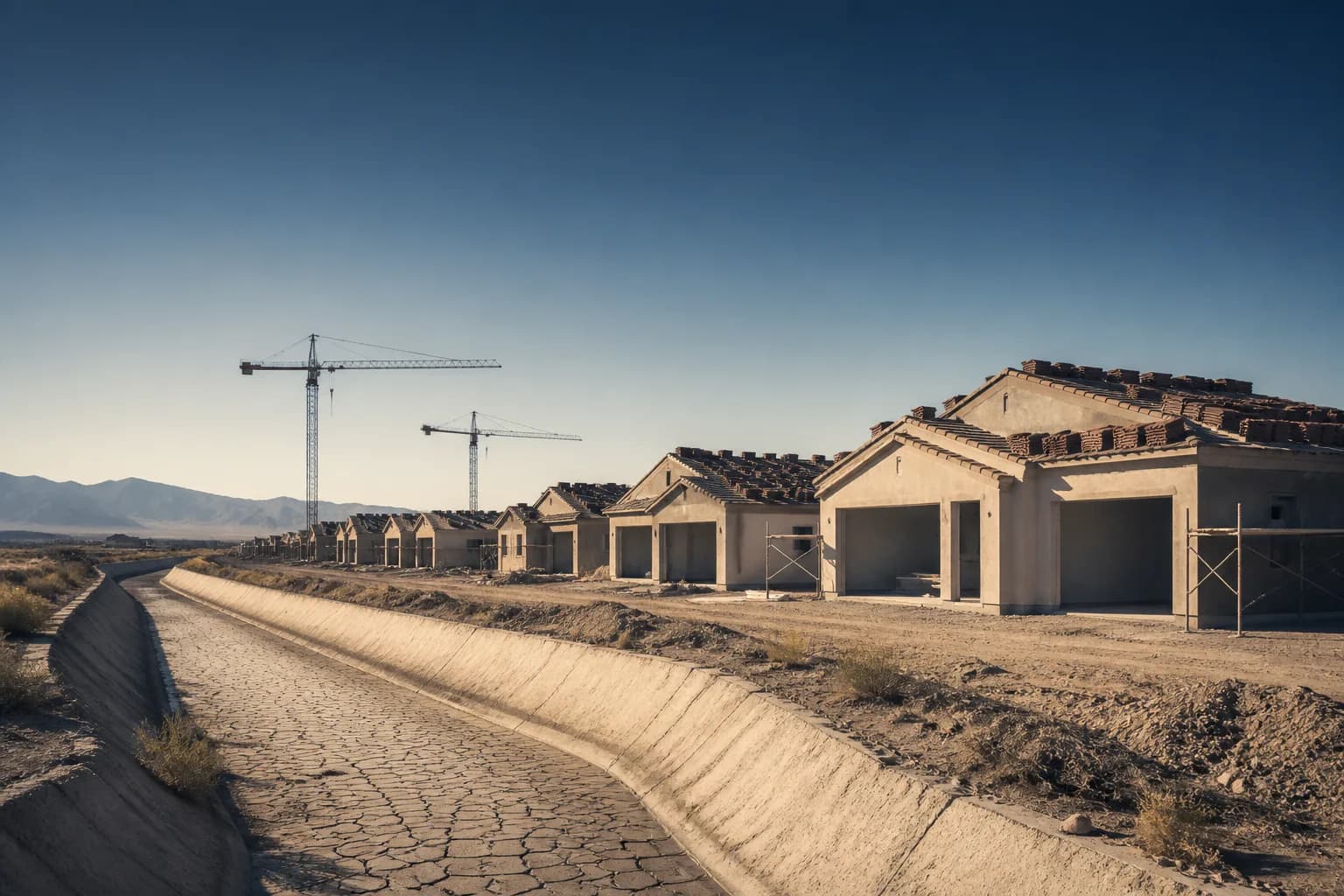
Why regulators, not the market, are the ones stopping construction
Arizona is not running out of buyers for new homes. It is running out of legal permission to build them in places without a proven long-term water supply.
Since 1980, Arizona's Groundwater Management Act has required developers in the state's Active Management Areas to demonstrate a 100-year "assured water supply" before a subdivision can be platted and sold. For decades that rule was mostly a formality in fast-growing suburbs. In June 2023, Arizona's Department of Water Resources (ADWR) published an updated Phoenix-area groundwater model showing the basin could not support all the new subdivisions relying solely on groundwater over the next century. That triggered a pause on new assured-water-supply certificates for groundwater-only projects in parts of the Phoenix Active Management Area, including sections of Buckeye, Queen Creek and the unincorporated fringe around them.
That regulatory shift is the real story behind a wave of YouTube commentary about Arizona's "water crisis," including a 26-minute video from creator The Resident Survivor that ranks 10 Arizona cities by how exposed they are to water-driven housing stress. The video leans into dramatic framing, but the underlying mechanism it describes is genuine: when the state won't certify a water supply, builders can't get final plats approved, and homes that were planned never get built.
The mechanism: how a water ruling becomes a construction freeze
The assured-water-supply rule works like a gate. A developer wants to build a subdivision. Before lots can be sold to homebuyers, the developer must either:
- Pump groundwater and prove, through ADWR modeling, that the local aquifer can support that demand for 100 years, or
- Secure water from a renewable source, such as a Colorado River allocation, treated effluent, or a designated provider with its own certificated supply.
When ADWR's updated model showed parts of the Phoenix basin couldn't clear that bar on groundwater alone, new projects in the affected zones lost their path to certification. Subdivisions with certificates already issued were unaffected, but land still in the pipeline — platted, marketed, sometimes partially built — was stranded in the process.
The Resident Survivor describes this bluntly for Buckeye, once the fastest-growing city in the country by percentage growth. The video says ADWR's model found a 15% deficit in the 100-year supply required by law, and that regulators "froze unapproved residential construction instantly." Whether or not it happened quite that fast, the direction is accurate: new groundwater-only subdivisions in the affected area currently cannot get certificates, and unbuilt lots have effectively gone into limbo.
What the numbers show across the affected cities
The video moves through ten cities, citing named sources — CoreLogic, Zillow, Redfin, Realtor.com, NAR, Moody's Analytics, the Bureau of Reclamation, and county or state agencies — for growth, price and inventory figures. These are the creator's cited numbers, not independently verified by US Housing Report, and should be treated as directional rather than precise.
| City | Water-related issue cited | Housing impact cited in the video |
|---|---|---|
| Buckeye | 15% deficit in required 100-year supply; new construction frozen | Asking prices down 27% in 8 months (Realtor.com, per video); construction jobs down 34% |
| Casa Grande | ADWR ruled the local basin can't support further unconstrained growth | Land values down 29% (Moody's Analytics, per video); population growth fell from ~5% to 0.4% |
| Surprise | Aquifer down more than 150 feet in a decade | New-build median prices down from $490,000 to $372,000 |
| Queen Creek | Aquifer levels dropping roughly 6 feet a year | Luxury values down 41% from pandemic peaks (Zillow, per video); foreclosures up 18% in a quarter |
| Chandler | Industrial (semiconductor) water use competing with residential supply | Homes on market 90+ days up 45% year-over-year (Redfin, per video) |
| Maricopa | Land subsidence over 2 feet in 20 years from groundwater extraction | Subsidence-affected homes selling at a 38% discount |
| Coolidge | Colorado River tier-2 shortage cut farm surface-water allocations 65% | Median home prices down 21% (NAR, per video) |
These are not evenly distributed problems. Buckeye, Casa Grande and parts of Surprise are direct examples of the assured-water-supply certificate freeze limiting new supply. Chandler and Coolidge are more about competing demand — industrial water users and Colorado River shortages squeezing what's left for households. Maricopa's subsidence issue is a separate, longer-running geological consequence of decades of groundwater pumping, not a new construction limit.
Why this matters even if you don't live in Arizona
Arizona's situation is an early, visible test of a question more Sun Belt metros will eventually face: what happens to home values and new supply when a state concludes growth has outrun the water available to support it.
For the broader housing market, the mechanism matters more than any single percentage. A regulator that pauses water certificates doesn't just slow new construction — it also freezes the pipeline of land that builders, investors and homeowners assumed would keep values rising through population growth. When that assumption breaks, existing inventory in the affected submarkets can sit longer, and owners who bought near the peak may face real markdowns to sell, which is what the video describes happening in Casa Grande and Surprise.
It's also a reminder that land-scarcity pitches — cheap acreage, "the next boomtown," waterfront desert living — deserve the same scrutiny wherever they appear. US Housing Report has covered a similar pattern in Florida, where cheap farmhouses with acreage aren't selling despite low list prices, because buyers are weighing carrying costs and practical limitations more than the sticker price. Related reading: Why Cheap Florida Farmhouses With Acreage Aren't Selling.
What this means for you
If you're buying in Arizona's outer suburbs: Ask for the specific assured-water-supply status of the subdivision before writing an offer, not the marketing brochure's summary. ADWR's Assured and Adequate Water Supply program publishes this information, and a builder or listing agent should be able to point to the certificate. A home already connected to a certificated municipal provider carries a different risk profile than a planned subdivision still awaiting groundwater approval.
If you own in one of the cited cities: A rate hike or a conservation mandate doesn't automatically mean your specific property is at risk of losing water access. It does mean utility costs are a real, growing line item for your household budget, and it's worth checking whether your water provider has a long-term supply plan on file with the state.
If you're selling: In markets where inventory is rising and days-on-market are stretching — as the video's Redfin and Realtor.com figures suggest for several of these cities — pricing realistically and disclosing known water-infrastructure issues up front (well dependence, arsenic or fluoride flags, subsidence reports) will matter more to close a deal than it did during the 2021-2022 boom.
If you're an investor: Land banking on the assumption that growth always resumes is a bet on regulatory approval you don't control. Confirm renewable water rights or an approved certificate before acquiring undeveloped parcels in Active Management Areas.
Where the video's framing outruns the evidence
The Resident Survivor's video is built around dramatic, one-way narration — language like "catastrophic collapse" and a projection that values in Buckeye's most vulnerable subdivisions could fall as much as 61%. That figure is described in the video itself as a CoreLogic risk-model projection under a specific bad-case scenario, not a current, realized price drop. Readers should treat scenario-based projections differently from reported closed-sale data.
There are also real counterpoints worth noting. Arizona's assured-water-supply system, whatever short-term disruption it causes, is one of the stricter growth-management frameworks in the country precisely because it forces this reckoning before subdivisions are built, rather than after residents move in and wells run dry — the outcome that hit the unincorporated Rio Verde Foothills community near Scottsdale in 2023, when Scottsdale cut off hauled-water deliveries and residents eventually arranged a private utility connection. Cities can and do respond to certificate freezes by securing renewable water rights, expanding recycled-effluent use, or negotiating imported supply, any of which can unlock building again. This is a policy and infrastructure problem with potential fixes, not a fixed, one-way collapse.
The video's per-city statistics are also presented without direct links to underlying reports, and some — like a cited "state task force" warning of a 48-month irrigation ban in Peoria — are difficult to verify independently. Treat individual numbers as claims to check against primary sources before making a financial decision.
What to watch through the rest of 2026
- Whether ADWR issues an updated Phoenix AMA groundwater model or eases the certificate pause for cities that secure alternative supply.
- Municipal water-rate filings in the cities listed above; utility costs often move faster than home prices.
- Redfin, Realtor.com and NAR data on days-on-market and price trends in Pinal and Maricopa County submarkets.
- Any moves by Buckeye, Queen Creek or Casa Grande to import surface water or expand recycled-water use — the clearest sign a construction freeze is lifting.
Arizona's water-and-housing story is real, but it is a policy process with feedback loops, not a countdown clock. The safest approach for anyone buying, selling or investing in these markets is to verify water-supply status directly with state and local sources rather than relying on any single video or aggregated statistic.