Why Airbnb Hosts Are Losing Money While Bookings Keep Growing
Booking demand for US Airbnbs rose only 2% year-over-year in July 2026, according to short-term rental data provider AirDNA — a figure cited by real estate analyst Reventure Consulting even though that month included World Cup-driven travel. Growth that slow, paired with years of new listings flooding the market, is squeezing the revenue individual hosts can earn per property.
At the same time, costs have not slowed down. Property taxes, insurance, professional management fees and a new Airbnb fee structure are all rising or shifting onto hosts. The result, according to Reventure Consulting's on-the-ground reporting from Orlando and Nashville, is that some owners who bought properties specifically to run as short-term rentals are now selling at losses of $200,000 to $400,000 — even in a market where bookings, in aggregate, are still technically growing.
This is the core tension behind the "airbnb market crash 2026" search trend: it is not a demand collapse in the way many people picture a crash. It is a margin story. Supply of listings has outrun growth in guest demand, corporate Airbnb has shifted its incentives toward guests and bargain pricing, and highly leveraged hosts are the ones absorbing the squeeze.
The Math Behind a Typical Orlando Airbnb
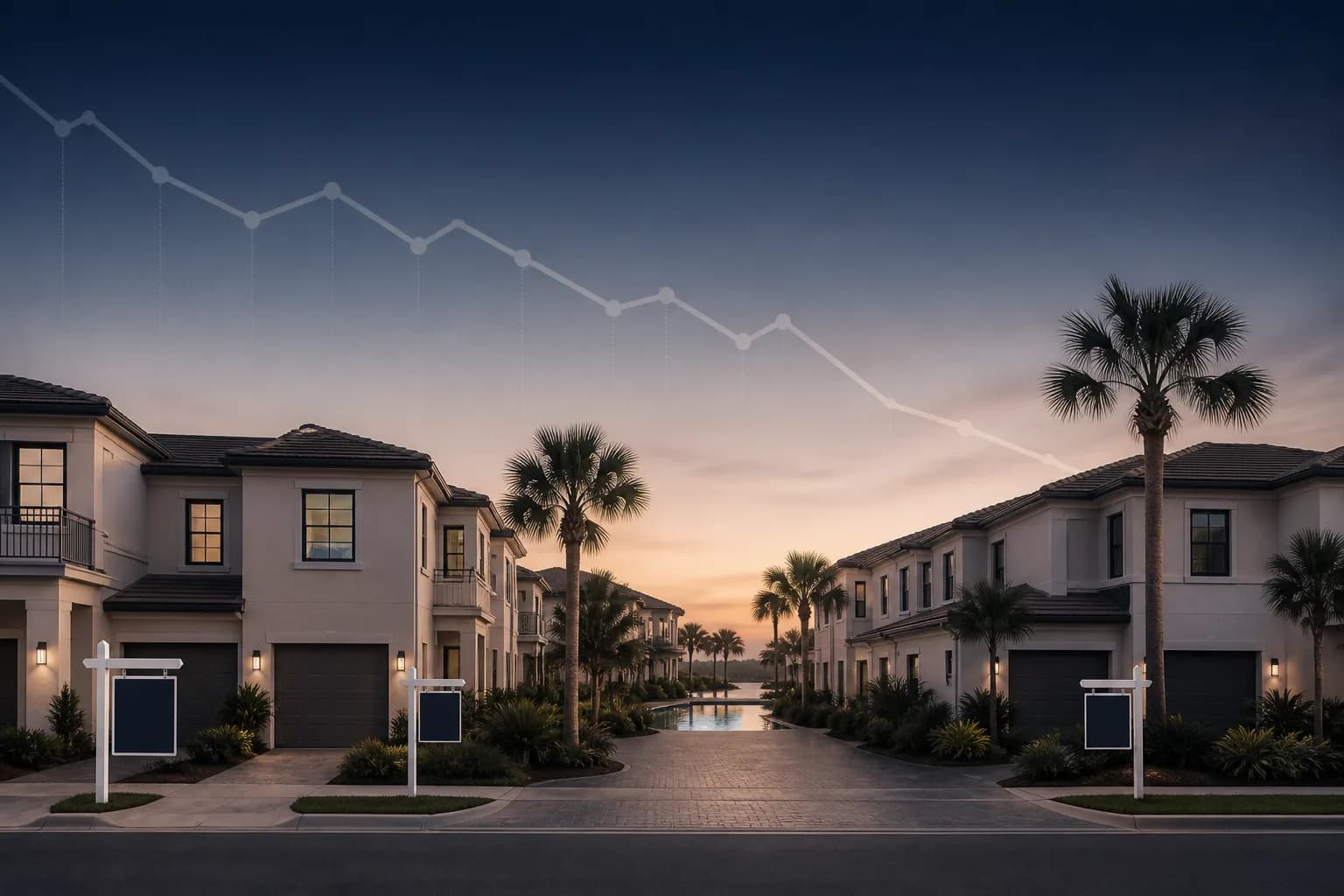
To understand why profits are shrinking even as headline booking numbers hold up, it helps to walk through a real example. Reventure Consulting examined a cluster of six-bedroom, five-bath townhomes near Orlando, Florida — an area marketed heavily to Airbnb investors — currently listed between $635,000 and $680,000.
Using an estimated nightly rate of roughly $300 and an occupancy rate of about 55% (a figure the creator pulled from local booking data), the rough annual math looks like this:
| Line item | Estimated annual figure |
|---|---|
| Gross revenue (RevPAR ~$190-195/night × 365) | ~$60,000 |
| Property management (15-20% of revenue) | ~$9,000-$10,000 |
| Property taxes | ~$8,000 |
| Insurance, maintenance, repairs | Several thousand more |
| Estimated net income | ~$30,000 |
| Implied cap rate on $630,000 asking price | ~4.8% |
A roughly 4.8% capitalization rate — annual net income divided by purchase price — is low for a single-family rental investment, especially one that carries the operational intensity, turnover risk and regulatory exposure of a short-term rental. For comparison, many long-term rental investors look for cap rates in the 6-8% range, though the "right" number depends on financing costs, location and risk tolerance. Reventure Consulting's conclusion is that prices on these properties "have got to go down much further" before buyer demand returns at scale.
Airbnb Corporate Is Thriving. Individual Hosts Are Not.
The most important distinction in this story is the split between Airbnb the public company and Airbnb the army of individual property owners.
Airbnb's most recent earnings showed 15% year-over-year revenue growth, a roughly 30% profit margin, and a stock price near five-year highs. CEO Brian Chesky has described a strategic pivot toward becoming what Reventure Consulting calls "the Amazon of travel" — adding hotel bookings, car rentals and experiences to the platform, and leaning into growth markets in Latin America, Europe and Asia rather than the saturated US single-family-home segment.
That pivot is good for Airbnb's shareholders. It is less good for the host who bought one house five years ago and depends on it for income. As the platform brings on more hotel inventory and more international listings, competition intensifies for the individual US host, and Airbnb's own algorithm increasingly rewards top-rated, competitively priced listings — leaving lower-ranked properties struggling for visibility even when overall search volume for their metro looks stable.
Reventure Consulting draws a direct comparison to Uber's early-driver economics: a business model that generated outsized income for early participants before supply competition — and, in Uber's case, autonomous vehicles — competed those excess profits away. The argument is not that Airbnb the company is failing; it's that the "easy money" era for individual hosts who piled in during 2021-2023 has ended.
Regulation Is Adding to the Pressure
Local regulation is compounding the margin squeeze in specific cities. Salt Lake City passed sweeping short-term rental restrictions effective July 1, 2026, including a 200-night annual cap on how much a single host can rent out one property. Local operators told the Salt Lake Tribune the cap could cut revenue potential by 40-50%, pushing some toward selling.
Airbnb has pushed back, sending Salt Lake City a cease-and-desist letter. The company alleges city representatives created fake guest accounts to lure hosts into accepting reservations the city considers illegal, then used those bookings as evidence for fines — which Airbnb says violates its terms of service. The dispute is a live example of the tension between cities trying to preserve housing stock for full-time residents and a platform trying to preserve its host base.
This isn't isolated. Reventure Consulting's viewer poll found that only 20% of respondents said they liked having Airbnbs in their neighborhood, 30% disliked them but thought they should remain legal, and 50% wanted restrictions. That sentiment — roughly half of respondents favoring limits — suggests more cities may follow Salt Lake City's approach, adding regulatory risk on top of the existing margin pressure.
Vacation Markets Are Already Showing Price Declines
The margin compression at the host level appears to be feeding into broader home-value trends in vacation-heavy markets. Citing Reventure App data, the video points to several zip codes and metros already down from their 2022 peak:
- A zip code southwest of Orlando, Florida: down roughly 13%
- Sevierville, Tennessee (a Great Smoky Mountains vacation market): double-digit declines
- Punta Gorda, Florida: down roughly 20%
- Phoenix, Arizona: down close to 10%
These are Reventure App's own estimates and should be treated as one firm's read on the data rather than a definitive, universally agreed benchmark — but the pattern is consistent with what's been documented in other STR-heavy Sun Belt markets. Readers tracking Florida's broader housing correction may also find useful context in our coverage of Florida foreclosures spiking and why people are leaving Florida in 2026, both of which touch on the same affordability and oversupply dynamics playing out in Orlando's Airbnb corridor.
DSCR Loans: The Financing Risk Behind the Losses
A meaningful share of the 2021-2022 Airbnb buying boom was financed with Debt Service Coverage Ratio (DSCR) loans — mortgages underwritten based on a property's projected rental cash flow rather than the borrower's personal income. Bloomberg reported on the rapid growth of this lending category at the time.
DSCR loans work fine when rental cash flow covers the required threshold. But when occupancy or nightly rates fall — as Reventure Consulting argues is now happening across saturated STR markets — the coverage ratio can drop below what the loan requires, increasing the risk that highly leveraged owners default or simply walk away rather than keep subsidizing a money-losing property. That dynamic likely explains part of why some of the Orlando and Nashville examples cited in the video are now short sales rather than voluntary listings.
Counterpoint: This Isn't a Full Market Collapse
It's worth being precise about what the data does and doesn't show. National Airbnb booking demand grew, even if only 2%, in July 2026 — it did not shrink. Airbnb Corporate's revenue and profit margin are both up. Orlando's short-term rental supply actually fell 4% year-over-year, even though more than 43,000 listings remain active in that metro alone.
In other words, this is a story of margin compression and oversupply concentrated among individual hosts — particularly those who bought at 2021-2023 prices, used aggressive financing, or operate in the most saturated vacation submarkets — rather than evidence that short-term rentals as a category are disappearing. Top-performing, well-reviewed listings in less saturated markets may still perform reasonably well. Readers should also note that Reventure Consulting sells a forecasting subscription product, which is a relevant disclosure when weighing the specific price-decline percentages cited in the video.
For broader context on whether these localized corrections point to a wider downturn, see our analysis in US Housing Market Recession 2026: What the Data Really Shows.
What This Means for You
If you own a short-term rental: Revisit your actual net cap rate, not your original purchase-price assumptions. Factor in rising property taxes, insurance and the new host-paid fee structure. If a DSCR loan's coverage ratio is tightening, talk to your lender before a forced sale becomes the only option.
If you're considering buying an Airbnb as an investment: Model occupancy and nightly rates conservatively, and stress-test the deal at a materially lower cap rate than the seller's marketing materials suggest. Turnkey "investment opportunity" listings, as seen in Orlando, often price in optimistic assumptions.
If you're a regular homebuyer or seller in a vacation market: Watch for increased inventory from motivated STR sellers, which can create negotiating leverage on price in markets like Orlando, Punta Gorda or Sevierville. This isn't personalized financial advice, but a rising share of distressed STR listings is generally a signal to negotiate harder, not to rush. See our related coverage of Florida Foreclosures Spike 300%: What's Driving the Surge in 2026 for more on distressed inventory trends.
If you're weighing "recession-proof" real estate strategies: Long-term rentals in markets with stable local employment, and primary residences in areas without heavy STR concentration, have historically shown more resilience than concentrated short-term-rental bets during oversupply corrections. No real estate segment is fully recession-proof, and this transcript-based analysis should not be read as a guarantee of future performance. For a look at why some renters and buyers are already leaving high-STR states, see Why Are People Leaving Florida? The 2026 Housing Data Explained.
What to Watch Next
Key signals for the rest of 2026 and into 2027 include AirDNA's monthly occupancy and RevPAR data for your target metro, local government action on STR licensing caps (following Salt Lake City's lead), and Airbnb's upcoming shift of the full platform fee onto hosts. Any further slowdown in booking growth alongside continued new-listing supply would likely extend the price pressure already visible in Orlando, Punta Gorda, Sevierville and Phoenix.