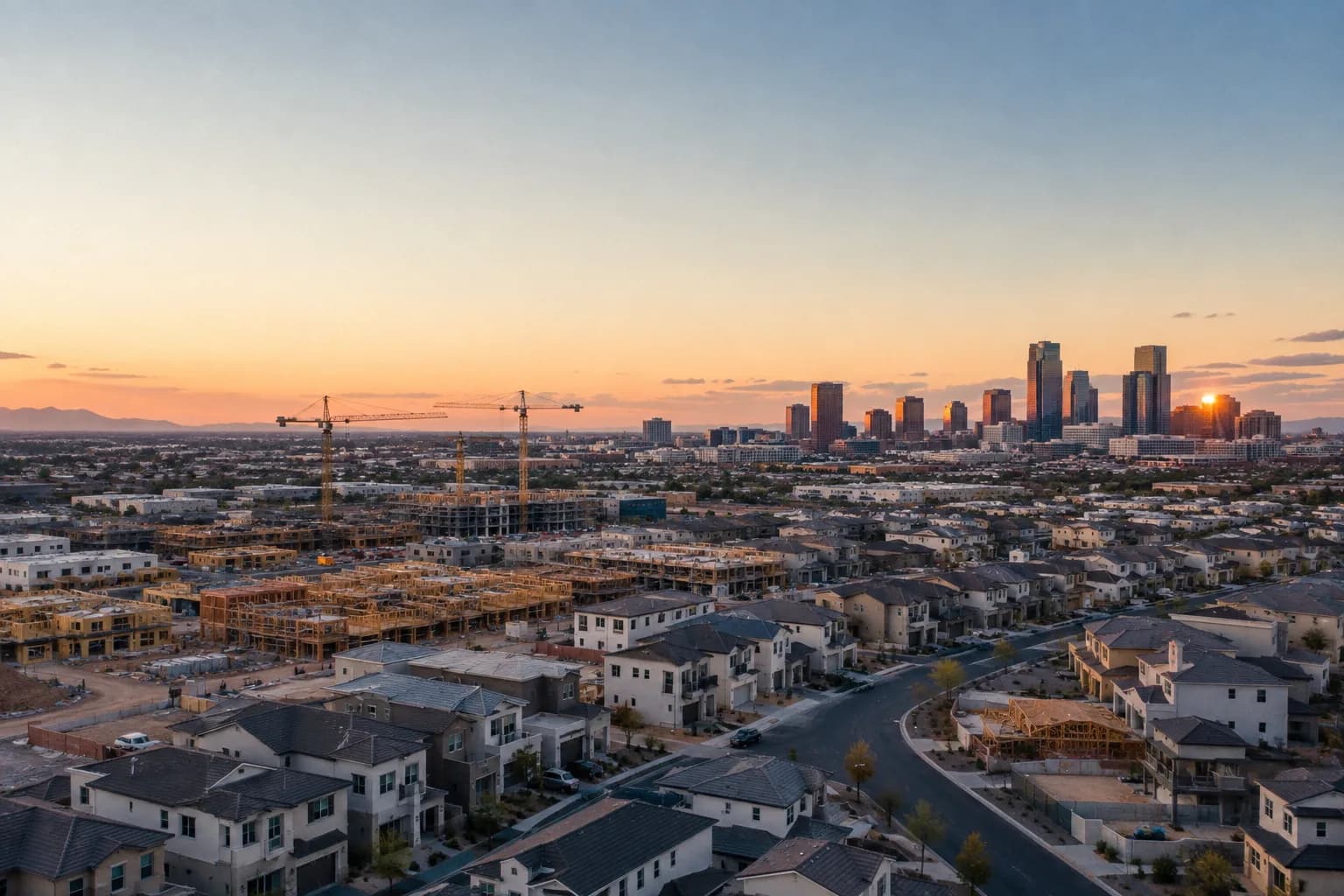
Which cities are actually gaining residents in 2026?
If you're weighing a move, or wondering why your local housing market feels more crowded, the short answer is this: growth in 2026 is concentrated in a familiar band of Sunbelt and secondary metros where jobs are diversifying and housing is still cheaper than the coasts.
A new countdown from the YouTube channel Discover The Cities ranks ten US cities it says are expanding faster than the rest of the country: Houston, Seattle, Dallas, Charlotte, Denver, Nashville, Orlando, Raleigh, Austin and Phoenix. The channel's creator frames this as a story about jobs, space and cost of living pulling people out of expensive coastal metros — but the video also repeatedly flags the same downside in nearly every city: home prices, rents and traffic are climbing right alongside the population.
That combination — inbound demand plus rising costs — is the real story for anyone buying, selling or already living in these markets. Below, we break down the list, add context the video doesn't cover, and translate it into practical guidance.
The 2026 fastest-growing cities, ranked
Here's the order presented in the video, along with the primary growth driver the creator cites for each:
| Rank | City | State | Cited growth driver |
|---|---|---|---|
| 1 | Houston | Texas | Energy, healthcare (Texas Medical Center), aerospace, affordability |
| 2 | Seattle | Washington | Tech (Amazon, Microsoft), aerospace (Boeing) |
| 3 | Dallas | Texas | Finance, Fortune 500 headquarters, logistics |
| 4 | Charlotte | North Carolina | Banking, finance, tech |
| 5 | Denver | Colorado | Tech, energy, aerospace, outdoor lifestyle |
| 6 | Nashville | Tennessee | Healthcare, entertainment, corporate services |
| 7 | Orlando | Florida | Tourism diversifying into tech, healthcare, logistics |
| 8 | Raleigh | North Carolina | Research Triangle tech, healthcare, universities |
| 9 | Austin | Texas | Tech (Apple, Google, Tesla, Dell) |
| 10 | Phoenix | Arizona | Diversified economy, space, lower costs |
The one hard figure in the video: Houston's city proper is home to more than 2.4 million people, and the broader metro area tops 7 million residents. For everything else, the ranking is presented as a general growth trend rather than a sourced statistical table — worth keeping in mind, since it's a YouTube countdown rather than a Census Bureau release (more on that below).
The common thread: jobs plus relative affordability
Every single city on this list follows the same basic formula, according to the creator: a diversifying local economy that no longer depends on one industry, combined with housing costs that are lower than San Francisco, New York, Los Angeles or Chicago.
Discover The Cities repeatedly points to the same migration pattern — workers leaving high-cost coastal metros for Sunbelt and secondary cities where the same salary buys more house and, often, a shorter commute. That's consistent with a broader relocation trend that's been visible in domestic migration data for several years: households moving from expensive coastal states toward Texas, Florida, North Carolina and the Mountain West.
Three industries show up again and again across the list: technology (Seattle, Austin, Denver, Raleigh), healthcare (Houston, Nashville, Raleigh), and finance (Charlotte, Dallas). Cities that diversified beyond a single legacy industry — Houston moving beyond oil and gas, Orlando moving beyond theme parks — are the ones the creator credits with the most durable growth.
What inbound demand does to home prices and competition
This is the part that matters most for readers of a housing site: population growth doesn't just mean more neighbors. It means more buyers competing for the same limited supply of listings.
The video is candid about this trade-off. In Austin, it notes that "the surge in demand for housing has pushed home prices and rents higher." In Denver, "housing prices and rents have climbed as demand for property has increased, making affordability a serious concern." Seattle gets the starkest framing, with the creator calling housing affordability "one of the biggest concerns" facing the city.
For prospective buyers, faster population growth in a metro generally translates into:
- More competition per listing — multiple offers become more common in popular neighborhoods, even when overall inventory is rising.
- Faster price appreciation in the most desirable submarkets — growth doesn't hit a metro evenly; it concentrates around job centers and new transit or commercial corridors.
- Rising rents, which often precede home-price gains as newcomers rent before buying.
- New construction racing to catch up, which can mean more choice in outer suburbs but longer commutes.
None of this is unique to these ten cities. It's the standard playbook in any metro absorbing rapid net in-migration. The Census Bureau's annual Vintage population estimates and the American Community Survey are the authoritative sources for verifying which metros are actually gaining residents fastest — worth checking directly if you're making a relocation decision based on growth claims. For home-price context, Freddie Mac's Primary Mortgage Market Survey tracks the mortgage rates shaping what buyers can afford in these markets, and NAR's existing-home sales reports show how inventory and pricing are moving nationally.
The strain growth doesn't advertise
The video is unusually consistent about pairing every growth story with its downside, and it's worth taking seriously rather than treating as boilerplate.
Phoenix and the broader Southwest face a genuine long-term water constraint tied to Colorado River allocations and drought conditions — a limit that's already shaping where builders can get permits. Our earlier coverage of how Arizona's water limits are freezing new home construction goes into more depth on why this is a structural issue rather than a temporary one, and it directly affects how much new housing Phoenix can realistically add even as demand keeps arriving.
Traffic and infrastructure strain show up in nearly every entry — Houston's road network, Denver's urban sprawl, Nashville's transportation systems. These are the kinds of costs that don't show up in a listing price but do show up in commute times and local tax bills as cities borrow to fund road and school expansions.
It's also worth noting that fast population growth and fast home-price growth aren't the same thing everywhere in these states. Texas as a whole has seen uneven price performance even in growing metros — some Texas cities are seeing prices fall even as population keeps climbing, according to our analysis of 10 Texas cities where home prices are falling fastest in 2026. That's a useful reminder that "growing" and "appreciating" are two different questions, and builders adding supply quickly can sometimes outpace buyer demand in specific submarkets.
A fair counterpoint to the growth narrative
It's worth stepping back from the video's optimistic framing. A YouTube countdown built around "fastest growing cities" is, by nature, a positive-news story — it doesn't weigh growth against the possibility that some of these markets could be overbuilding, or that migration patterns can reverse when remote-work policies or job markets shift.
Growth rankings built from real-time data (rather than a general trend narrative) typically come from the Census Bureau, and they can differ meaningfully depending on whether you're measuring the city proper, the metro area, or year-over-year percentage growth versus raw numeric growth. Houston's raw population gain looks enormous partly because its base population is already large; a smaller city adding a similar number of new residents could post a far higher percentage growth rate. Readers chasing "the fastest growing city" should check which measure a ranking actually uses before treating it as gospel.
It's also fair to note that housing markets are cyclical. Rapid price appreciation in high-growth metros has, in past cycles, been followed by corrections when affordability limits reduce the pool of buyers who can qualify at prevailing mortgage rates. Our broader look at the US housing market recession warning signs for 2026 is a useful companion read for anyone weighing a purchase in a hot market against the risk that hot growth cools.
What this means for you
If you're a buyer relocating to one of these metros: budget for competition, not just for the sticker price. Get pre-approved before house hunting, and ask a local agent about how many offers similar homes have drawn in the past 90 days. In faster-growing submarkets, prices can move meaningfully between when you start looking and when you're ready to write an offer.
If you're a seller in one of these ten cities: population inflows generally work in your favor, particularly in job-center-adjacent neighborhoods. But don't assume every part of the metro is appreciating evenly — pull comparable sales for your specific submarket rather than relying on citywide averages.
If you're an owner staying put: rising demand can be a mixed blessing. Home equity may grow, but so can property tax assessments and the cost of local infrastructure bonds that pay for the roads and schools these cities need to keep up with growth.
If you're an investor: the cities on this list are the ones institutional and small investors alike are already watching closely, which means competition for rental properties is also elevated. Diversify your due diligence beyond the headline growth story — check permitting pipelines, local rent-control rules, and whether new supply is being added faster than population in specific zip codes.
Whichever category you fall into, treat a countdown video as a starting point for research, not a final answer. Cross-check any relocation or investment decision against Census Bureau population data, local MLS inventory reports, and a lender's current rate quote before committing.